How Location Influences Property Prices and Returns
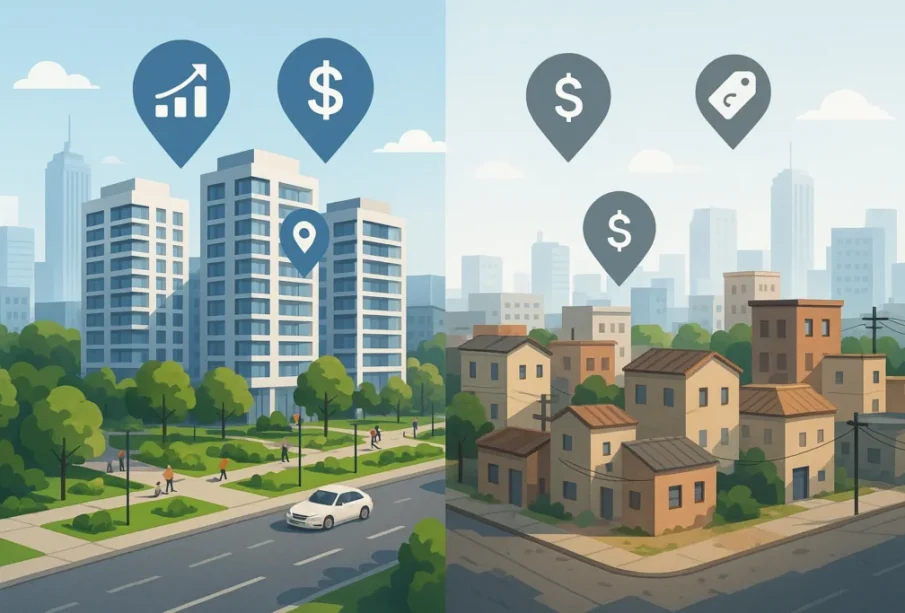
In real estate, the oldest adage remains the most powerful: location, location, location. While a building structure constantly depreciates over time, the land underneath it can appreciate significantly depending on where it is situated. Understanding the precise factors that drive location value allows home buyers and real estate investors to identify high-performing assets, optimize rental yields, and secure strong capital appreciation over long investment horizons.
Location value is not static; it responds to evolving economic conditions, urban development patterns, demographic shifts, and infrastructure investments. Analyzing how geographic and neighborhood variables influence real estate pricing enables buyers to make data-driven housing decisions that yield optimal long-term returns.
Macro-Level Location Drivers: Metro Areas and Regional Markets
At the macro level, real estate valuations are shaped by broad regional economic factors. Differences in population growth, employment opportunities, and state-level policy create vastly different pricing dynamics across metropolitan statistical areas.
-
Job Growth and Local Economic Diversity: Regions with diverse, expanding job markets—such as major tech centers, healthcare hubs, or finance capitals—consistently attract skilled workers. High employment density drives steady demand for both rental housing and primary home purchases, supporting consistent price growth.
-
Demographic Migration Patterns: Population shifts toward Sunbelt states, suburban regions, or secondary metro markets directly impact housing supply-demand balances. Areas experiencing net population inflows see upward pressure on home prices and rental rates.
-
State Tax Climates and Municipal Policies: Pro-business regulatory environments, reasonable property tax rates, and the absence of state income taxes can draw corporate headquarters and new residents, creating long-term structural tailwinds for local property values.
-
Supply-Side Constraints: Topography and municipal zoning regulations dictate how easily new housing can be built. Geographic boundaries like oceans or mountains, paired with strict urban growth boundaries, limit new supply and make existing real estate far more valuable.
Micro-Level Location Factors: Neighborhood Dynamics
Zooming in from the regional level, micro-location factors cause property prices to vary dramatically even between adjacent streets within the same zip code. Evaluating neighborhood-level attributes is critical for assessing short-term livability and long-term value retention.
Top-performing school districts serve as one of the most reliable anchors for residential property value. Homes situated in premier public school attendance zones consistently command price premiums and hold their value remarkably well during broader economic downturns, as family demand remains constant.
Proximity to key commercial centers, employment hubs, retail corridors, and entertainment districts also plays a major role in pricing. Properties located within walking distance of grocery stores, cafes, parks, and dining options command significant walkability premiums, appealing strongly to young professionals and downsizing retirees alike.
Safety and public safety perceptions represent another foundational pricing pillar. Neighborhoods with low crime rates, active community organizations, well-lit streets, and clean public infrastructure naturally attract consistent buyer demand, preserving property values over time.
Infrastructure, Transit, and Connectivity
Accessibility is a primary determinant of land value. How efficiently residents can navigate to and from their daily destinations directly dictates what they are willing to pay for housing in a given area.
Ease of access to major transportation arteries, highway interchanges, public bus routes, and light rail lines reduces commute times, making a neighborhood far more attractive. Properties situated near major transit hubs often appreciate faster than isolated developments, as transit-oriented developments continue to gain popularity among urban commuters.
However, proximity requires careful balance. While being five minutes from a highway entrance or train station adds value, being directly adjacent to noisy train tracks, airport flight paths, or busy multi-lane freeways can depress property values due to noise pollution, air quality concerns, and high traffic volumes.
Future infrastructure investments represent major opportunities for real estate appreciation. Municipal plans for new subway lines, bridge expansions, tech corridors, or utility upgrades can transform overlooked industrial or residential pockets into highly desirable residential neighborhoods over a multi-year horizon.
Environmental and Aesthetic Attributes
Physical surroundings and micro-climate conditions heavily influence buyer desirability and ongoing property carrying costs.
Natural features—such as waterfront access, mountain views, proximity to urban greenbelts, and elevated topography—command substantial luxury price premiums. Oceanfront or lakefront properties carry some of the highest land values per square foot due to absolute supply scarcity.
Conversely, environmental risk factors can negatively impact property returns. Homes located within high-risk flood zones, wildfire hazard areas, or low-lying coastal zones face escalating property insurance premiums, strict building code requirements, and potential devaluation from natural disasters. Investors must factor climate risks and insurance costs directly into their total return projections.
How Location Impacts Rental Yields versus Capital Appreciation
Location types generally trade off between immediate cash flow and long-term equity growth. Understanding these dynamics helps investors align property choices with their specific financial strategies.
Urban core locations in primary cities usually feature high entry prices and lower initial cap rates, resulting in modest cash flow. However, these prime locations typically deliver reliable, long-term capital appreciation and strong historical resilience during market corrections.
Suburban and emerging secondary markets often offer lower acquisition costs, lower property taxes, and higher initial rental yields. These locations suit cash-flow-focused investors, provided the local area maintains steady employment growth and demographic stability to prevent tenant turnover.
Frequently Asked Questions
Why do two identical houses in the same town have vastly different prices?
Identical houses can carry significantly different market values due to micro-location variables. Factors like school district boundaries, lot positioning, orientation toward sunlight, proximity to busy main roads, neighborhood street appearance, and corner lot status create noticeable value differences even between homes located just streets apart.
How can an investor identify an emerging neighborhood before prices rise?
Investors look for early indicators of revitalization, such as rising commercial investment, newly opened independent cafes or boutique shops, high rates of home renovation activity, declining crime rates, and municipal plans for public infrastructure improvements. Additionally, spillover demand from pricing out adjacent, established neighborhoods strongly signals future appreciation.
Does being close to a popular retail center help or hurt property value?
It depends on the exact buffer distance. Being within a five to ten minute walk or short drive to popular retail centers adds convenience and value. However, living directly adjacent to a busy commercial center can reduce residential value due to light pollution, delivery truck noise, pest risks, and excess parking traffic on residential streets.
How do historical district designations affect location value?
Historical district designations protect neighborhood character by restricting disruptive modern developments and uncharacteristic structural alterations. This historic preservation creates supply scarcity and maintains long-term architectural appeal, usually supporting strong property values, though it can limit an owner ability to quickly make external renovations.
How does zoning legislation impact residential property appreciation?
Zoning laws dictate land use density and permitted property types. Single-family zoning protects neighborhoods from high-density commercial encroachment, preserving low noise levels and low traffic volume. Conversely, upzoning laws that allow multi-family units or accessory dwelling units on single-family lots can increase underlying land value for investors looking to develop or add rental units.
Can a bad location be offset by high-end interior home renovations?
Only to a very limited extent. Real estate professionals refer to this as over-improving a property. While luxury finishes and modern floor plans make a home more attractive, buyers will rarely pay top-dollar for a fully renovated house situated in a neighborhood with poor schools, high crime rates, or undesirable environmental factors. Location ultimately caps potential property valuation.
What is a walkability score and how does it influence real estate prices?
A walkability score measures how easily daily errands can be accomplished on foot from a specific address based on distance to amenities like grocery stores, schools, parks, and public transit. High walkability scores correlate strongly with higher property values and faster rental adoption, as modern urban buyers prioritize convenience and reduced reliance on personal vehicles.