Beyond Bricks and Mortar: An Enlightened Perspective on Real Estate in the Modern Age

Introduction: The Timeless Magnetism of Real Estate
For centuries, real estate has captivated humankind’s imagination and ambitions alike. Land ownership, once a privilege reserved for monarchs and nobility, gradually evolved into an attainable dream for the aspiring middle class. Today, this sector is far more than plots and buildings; it is an intricate tapestry interwoven with economic shifts, societal aspirations, technological advancements, and environmental considerations.
Real Estate: A Pillar of Wealth and Stability
In almost every culture, property has symbolized security and legacy. Even in today’s digitized economy, tangible assets such as real estate retain a unique allure. While stocks may fluctuate with market sentiment overnight, land endures. Bricks age but seldom vanish.
Why does real estate hold such weight?
-
Tangible Value: Unlike intangible investments, property is something one can stand on, live in, or develop.
-
Appreciation Potential: Over time, well-chosen properties generally increase in value, rewarding patience.
-
Passive Income: Real estate can generate rental yields, turning ownership into an active stream of revenue.
-
Hedge Against Inflation: As the cost of living rises, so too does the value of well-situated land and properties.
The Changing Face of Urban Landscapes
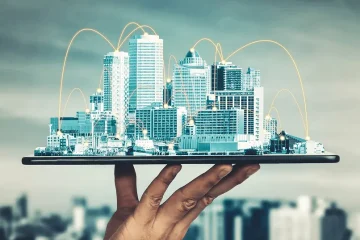
Cities, once rigid grids of residential blocks and commercial towers, are transforming into dynamic, mixed-use spaces designed for human interaction and sustainability. Urban planners now blend work, life, and leisure into cohesive environments that adapt to the rhythms of modern living.
Consider the recent surge in co-living spaces and micro-apartments — novel solutions to soaring urban density. These are not merely trends but responses to changing demographics and values: mobility, minimalism, and shared community experiences.
Technology: Redefining the Real Estate Transaction
One cannot overlook the profound ways in which technology has revolutionized real estate. The dusty binders and in-person tours of yesteryear have yielded to virtual walkthroughs, AI-driven valuations, and blockchain-enabled smart contracts.
Key innovations reshaping the sector include:
-
PropTech Solutions: Platforms that streamline buying, selling, and managing property portfolios.
-
Virtual & Augmented Reality: Prospective buyers can ‘walk through’ a house thousands of miles away without stepping out their front door.
-
Data Analytics: Sophisticated algorithms now predict property values and neighborhood trends with remarkable accuracy.
-
Blockchain: By eliminating intermediaries and ensuring transparent transactions, blockchain promises to reduce fraud and expedite deals.
Sustainability: The New Non-Negotiable
Modern buyers and developers can no longer afford to ignore sustainability. Buildings today must do more than shelter inhabitants; they must tread lightly on the planet. Green roofs, solar panels, rainwater harvesting, and energy-efficient designs are no longer luxuries but imperatives for responsible development.
Moreover, governments worldwide are tightening regulations and incentivizing eco-friendly projects. From carbon-neutral office towers to smart homes that learn occupants’ patterns to minimize waste, the future of real estate must be green or risk obsolescence.
The Human Element: Emotion in Every Transaction
Despite the spreadsheets, data models, and legal clauses, real estate remains profoundly human at its core. A first home is not just an address; it is a nest for dreams and memories. An office is more than desks and walls; it shapes corporate culture and innovation.
Skilled real estate professionals understand this emotional undercurrent. The best brokers, architects, and developers appreciate that they are not merely closing deals but creating spaces where life unfolds in all its unpredictable beauty.
Challenges on the Horizon
No industry of this scale is without hurdles. Soaring property prices in major cities have put homeownership out of reach for many young families. Gentrification, while revitalizing neighborhoods, often displaces long-term residents, fraying the social fabric.
Additionally, the question of affordability looms large. If the industry fails to address it, the dream of owning a home could remain elusive for entire generations. Innovative policies — such as co-operative housing, modular homes, and flexible financing — will play a pivotal role in bridging these gaps.
Real Estate as a Canvas for the Future
Perhaps the most fascinating aspect of real estate is its role as a canvas for the future. The skyline of any city is a frozen story of its ambitions, struggles, and evolution. From futuristic smart cities in the Middle East to regenerative communities designed to heal the environment rather than exploit it, real estate sits at the heart of humanity’s next chapter.
Conclusion: A Legacy Beyond Ownership
To view real estate merely as a commodity is to miss its deeper significance. Property shapes lifestyles, communities, and even the fate of entire economies. For investors, it remains a time-tested pillar of wealth. For families, it is a haven and heirloom. For cities, it is both challenge and opportunity — a blank slate upon which tomorrow’s stories will be written.
As we stand on the cusp of radical societal and technological shifts, the true custodians of real estate must think beyond profits. They must embrace responsibility — to design with empathy, to build sustainably, and to ensure that the right to a dignified living space is not a privilege, but a promise kept for all.
In the end, real estate is not simply about bricks and mortar. It is about the human desire to belong, to thrive, and to leave something enduring for those who come after us. That, perhaps, is its greatest value of all.